
Share
Seismic Restraint Systems for Buildings: Key Code Requirements and Design Mistakes

Seismic restraint systems for buildings sit at the intersection of life safety, code compliance, and operational continuity. In earthquake-prone regions, damage rarely stops at the structure itself. Unrestrained cable trays, pipes, ductwork, switchgear connections, and suspended equipment can fail, leak, disconnect, or collapse even when the main frame remains standing.
That is why seismic restraint systems for buildings matter across the broader BEFS landscape of electrical distribution, plumbing, MEP infrastructure, and fire safety. They protect the hidden networks that keep buildings functional. They also reduce inspection findings, insurance exposure, shutdown risk, and costly retrofit work after design review or site audit.
For teams responsible for quality and safety, the challenge is not only choosing restraints. It is making sure the design basis, product approvals, installation details, and field conditions all align with the governing code path. Many failures come from coordination gaps rather than missing hardware.
What seismic restraint systems actually cover
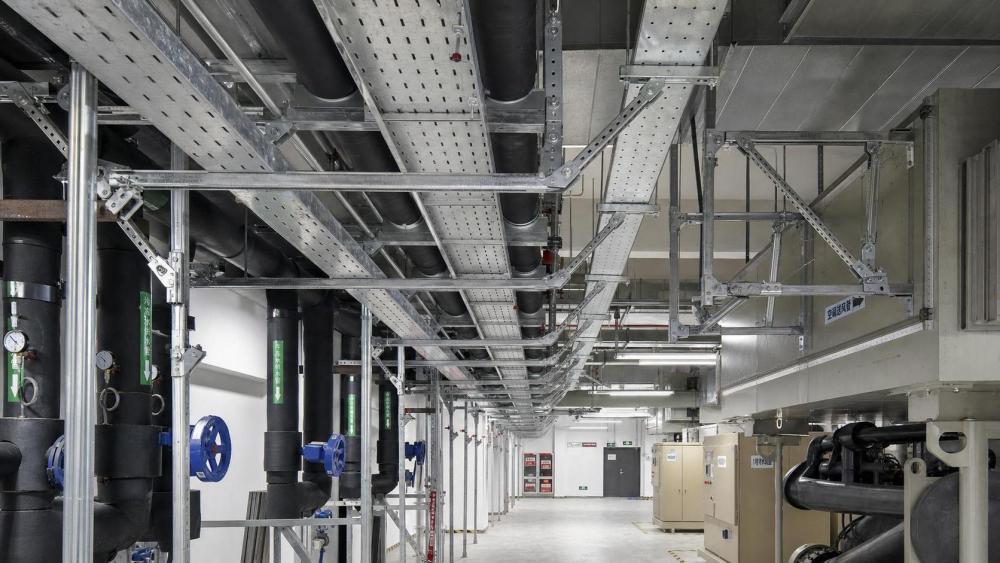
In practical terms, seismic restraint systems for buildings are engineered measures that limit movement of nonstructural components during seismic events. They are not limited to one trade. They apply across electrical, mechanical, plumbing, fire protection, and communications infrastructure.
Typical restrained elements include suspended pipes, conduit runs, cable trays, busbar trunking supports, air ducts, pumps, tanks, in-line equipment, vibration-isolated units, and emergency systems that must remain functional after shaking.
The goal is not to make every component rigid. The goal is controlled movement. A compliant restraint design allows expected displacement where needed, prevents dangerous swing or overturning, and keeps connected systems from tearing apart at joints, anchors, or interfaces.
Why code compliance has become a bigger issue
Nonstructural seismic protection now receives more attention because buildings depend on complex service networks. A high-rise may survive an earthquake structurally, yet still lose water, power distribution, fire suppression, data, or smoke control because internal systems were poorly restrained.
This is especially relevant in hospitals, data centers, transport hubs, industrial buildings, and mixed-use developments. In these settings, the value of seismic restraint systems for buildings extends beyond compliance. It affects emergency response, asset protection, tenant safety, and business continuity.
Across the market, BEFS-related systems are becoming denser and more prefabricated. That brings efficiency, but it also means a small coordination error can affect entire MEP racks, cable containment routes, or packaged utility modules.
The code requirements that usually drive decisions
The exact rules depend on jurisdiction, seismic design category, occupancy importance, and the governing building code. Still, several requirements appear repeatedly in project reviews and inspections.
Design force and component importance
Restraints must be designed for calculated seismic forces, not selected by appearance or habit. Importance factors can raise the demand for essential systems, including emergency power, fire protection, and critical utility services.
Approved anchors and load paths
A restraint is only as strong as its connection to the structure. Codes and referenced standards require verified anchors, suitable base material, and a complete load path back to structural elements that can carry the seismic force.
Brace spacing and orientation
Long runs of pipe, conduit, and cable tray need restraints at prescribed intervals. Longitudinal and transverse bracing must both be considered. Leaving one direction unresolved is a common path to noncompliance.
Allowance for movement at interfaces
Seismic restraint systems for buildings must account for differential movement. Flexible couplings, sway clearance, seismic joints, and edge offsets become critical where services cross expansion joints or connect to isolated equipment.
Documentation and special inspection
Projects often require calculations, product data, installation details, and field verification. Missing paperwork can delay approval even when the physical installation looks acceptable.
Design mistakes that repeatedly lead to failures
The most expensive problems usually start early. A detail copied from another job, a supplier submittal used outside its tested range, or a coordination issue hidden above the ceiling can all undermine seismic restraint systems for buildings.
Treating bracing as an add-on
Seismic bracing cannot be left to the final installation stage. When pipe routes, tray elevations, and duct positions are fixed first, there may be no room left for proper brace angles, anchor edge distances, or maintenance access.
Ignoring system weight changes
Design loads often increase after insulation, water fill, valve packages, or bundled cable additions. A support sized for an empty line may not remain adequate in the as-built condition.
Using approved products in unapproved ways
Certification matters, but scope matters more. A brace component may be tested for one configuration and misapplied in another. This happens with anchor embedment, rod length, attachment angles, and mixed-component assemblies.
Missing interaction between trades
Electrical containment, sprinkler mains, chilled water lines, and ventilation ducts often share congested zones. One trade’s brace can block another trade’s load path or interfere with fireproofing, access panels, or future maintenance.
Forgetting operational continuity
Some systems must not only stay attached. They must keep working. That distinction is crucial for emergency feeders, fire pumps, alarm circuits, medical gases, and critical water services.
Where closer review adds the most value
Not every area carries the same risk. In many projects, a focused review of certain zones reveals most of the hidden exposure.
- Equipment rooms, where heavy pumps, switchboards, and suspended services concentrate loads.
- Risers and shafts, where vertical distribution systems transition through multiple floors.
- Expansion joint crossings, where differential building movement can damage connected services.
- Roof-level plant areas, where amplification and weather exposure affect restraints and anchors.
- Prefabricated MEP corridors, where modular efficiency depends on accurate seismic assumptions.
From an operational perspective, seismic restraint systems for buildings deserve the same attention as fire-rated cables, pressure control valves, or switchgear thermal management. They are part of resilience, not a secondary accessory.
A practical review framework for design and field teams
A useful review process should connect drawings, calculations, product data, and field reality. That is where many BEFS-related decisions become more reliable.
- Confirm the governing code, seismic category, and occupancy importance before submittal review.
- Check that restraint calculations match actual component weights and support spans.
- Verify anchor type, substrate condition, edge distance, and installation torque requirements.
- Review clashes between seismic braces and other MEP, fireproofing, or architectural elements.
- Inspect as-built deviations, especially where site rerouting changed brace geometry.
- Maintain traceable records for approvals, inspections, and later lifecycle maintenance.
This approach reduces the chance that compliant products end up in noncompliant systems. It also helps compare suppliers and assemblies on more than price alone, which is increasingly important in projects balancing export sourcing, local approval requirements, and long-term facility reliability.
What to assess next before approval or retrofit
If a project is still in design, the next step is to test whether the restraint concept is coordinated with actual routes, loads, and interfaces. If the building is already operating, start with critical systems, previous inspection remarks, and locations where service continuity matters most.
Seismic restraint systems for buildings should be evaluated as part of a larger infrastructure picture that includes electrical safety, fluid containment, fire performance, and maintainability. That broader view is often where the real risk becomes visible.
A disciplined review of code assumptions, restraint details, approved components, and field installation quality usually provides the clearest path forward. It helps separate cosmetic compliance from true seismic readiness, which is the standard that resilient buildings ultimately need.
Structural Safety Fellow
Related News
- 00
0000-00
FM Global Raises Seismic Bracing Test Bar for 2026 - 00
0000-00
FM Global Tightens Seismic Bracing Certification - 00
0000-00
Seismic Restraint Systems for Buildings: Key Code Requirements and Design Mistakes - 00
0000-00
GB/T 38339-2026 Takes Effect as Middle East EPC Tenders Cite Dynamic Seismic Testing - 00
0000-00
Seismic Restraint Systems for Ductwork: How to Choose the Right Bracing Layout
Weekly Insights
Stay ahead with our curated technology reports delivered every Monday.