
Share
How Buyers Can Choose Stainless Steel Square Tube Without Specification Gaps

Industrial and commercial purchasing often starts with a familiar product name, yet the most reliable orders are built from application details. For steel distributors, construction buyers, fabrication shops, handrail suppliers, equipment frame builders, and import purchasing teams, Stainless Steel Square Tube should be reviewed through use conditions, quality expectations, inspection, packing, and after-arrival workflow. A product page can confirm the category, but the purchase order must describe how the product will be processed, installed, stored, or resold.
This guide gives buyers a practical framework for evaluating the product without relying on exaggerated claims or unsupported numbers. It focuses on decision factors that can be checked before shipment: specification clarity, supplier communication, document control, packaging, and receiving discipline. The result is a more useful article for procurement teams that need fewer disputes and more predictable delivery quality.
Start With the Final Fabrication Use
Start With the Final Fabrication Use is where the buyer should turn a product name into a working specification. For steel distributors, construction buyers, fabrication shops, handrail suppliers, equipment frame builders, and import purchasing teams, the product is connected with architectural framing, machine guards, handrails, light structures, decorative supports, and general fabrication. If the inquiry only asks for a price, the supplier may not see the operating condition, visual requirement, tolerance need, or handling risk that will decide whether the shipment is accepted after arrival.
The main risk is grade mismatch, weak finish control, wall-thickness variation, edge damage, poor packing, and unclear inspection records. These issues usually start as small omissions in the first discussion. A stronger purchasing process records the application, key technical fields, inspection expectations, document package, and packing method before the quotation is treated as final. That makes supplier comparison more factual and reduces avoidable claims.
Buyers should also treat grade, size, finish, tolerance, welding quality, packing, and repeat-order control as a connected workflow rather than separate checklist items. When one field changes, the team should review its effect on cost, delivery, receiving, fabrication, resale, and project acceptance. This habit is especially useful for repeat orders because it prevents quiet specification drift between shipments.
Compare Grade and Finish Together
Compare Grade and Finish Together is where the buyer should turn a product name into a working specification. For steel distributors, construction buyers, fabrication shops, handrail suppliers, equipment frame builders, and import purchasing teams, the product is connected with architectural framing, machine guards, handrails, light structures, decorative supports, and general fabrication. If the inquiry only asks for a price, the supplier may not see the operating condition, visual requirement, tolerance need, or handling risk that will decide whether the shipment is accepted after arrival.
The main risk is grade mismatch, weak finish control, wall-thickness variation, edge damage, poor packing, and unclear inspection records. These issues usually start as small omissions in the first discussion. A stronger purchasing process records the application, key technical fields, inspection expectations, document package, and packing method before the quotation is treated as final. That makes supplier comparison more factual and reduces avoidable claims.
Buyers should also treat grade, size, finish, tolerance, welding quality, packing, and repeat-order control as a connected workflow rather than separate checklist items. When one field changes, the team should review its effect on cost, delivery, receiving, fabrication, resale, and project acceptance. This habit is especially useful for repeat orders because it prevents quiet specification drift between shipments.
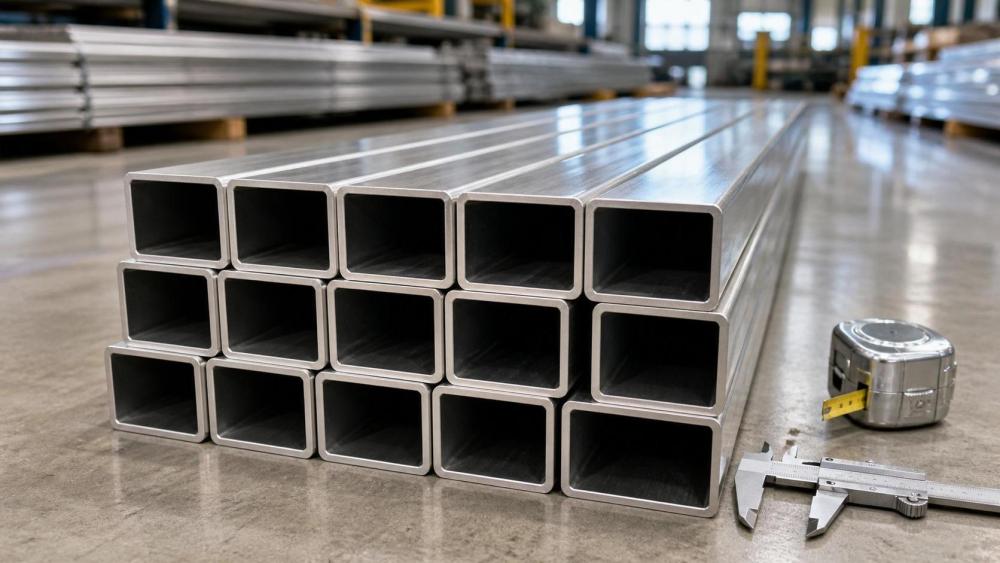
Check Wall Thickness and Straightness
Check Wall Thickness and Straightness is where the buyer should turn a product name into a working specification. For steel distributors, construction buyers, fabrication shops, handrail suppliers, equipment frame builders, and import purchasing teams, the product is connected with architectural framing, machine guards, handrails, light structures, decorative supports, and general fabrication. If the inquiry only asks for a price, the supplier may not see the operating condition, visual requirement, tolerance need, or handling risk that will decide whether the shipment is accepted after arrival.
The main risk is grade mismatch, weak finish control, wall-thickness variation, edge damage, poor packing, and unclear inspection records. These issues usually start as small omissions in the first discussion. A stronger purchasing process records the application, key technical fields, inspection expectations, document package, and packing method before the quotation is treated as final. That makes supplier comparison more factual and reduces avoidable claims.
Buyers should also treat grade, size, finish, tolerance, welding quality, packing, and repeat-order control as a connected workflow rather than separate checklist items. When one field changes, the team should review its effect on cost, delivery, receiving, fabrication, resale, and project acceptance. This habit is especially useful for repeat orders because it prevents quiet specification drift between shipments.
Review Welding and Edge Quality
Review Welding and Edge Quality is where the buyer should turn a product name into a working specification. For steel distributors, construction buyers, fabrication shops, handrail suppliers, equipment frame builders, and import purchasing teams, the product is connected with architectural framing, machine guards, handrails, light structures, decorative supports, and general fabrication. If the inquiry only asks for a price, the supplier may not see the operating condition, visual requirement, tolerance need, or handling risk that will decide whether the shipment is accepted after arrival.
The main risk is grade mismatch, weak finish control, wall-thickness variation, edge damage, poor packing, and unclear inspection records. These issues usually start as small omissions in the first discussion. A stronger purchasing process records the application, key technical fields, inspection expectations, document package, and packing method before the quotation is treated as final. That makes supplier comparison more factual and reduces avoidable claims.
Buyers should also treat grade, size, finish, tolerance, welding quality, packing, and repeat-order control as a connected workflow rather than separate checklist items. When one field changes, the team should review its effect on cost, delivery, receiving, fabrication, resale, and project acceptance. This habit is especially useful for repeat orders because it prevents quiet specification drift between shipments.
Plan Packing for Export Handling
Plan Packing for Export Handling is where the buyer should turn a product name into a working specification. For steel distributors, construction buyers, fabrication shops, handrail suppliers, equipment frame builders, and import purchasing teams, the product is connected with architectural framing, machine guards, handrails, light structures, decorative supports, and general fabrication. If the inquiry only asks for a price, the supplier may not see the operating condition, visual requirement, tolerance need, or handling risk that will decide whether the shipment is accepted after arrival.
The main risk is grade mismatch, weak finish control, wall-thickness variation, edge damage, poor packing, and unclear inspection records. These issues usually start as small omissions in the first discussion. A stronger purchasing process records the application, key technical fields, inspection expectations, document package, and packing method before the quotation is treated as final. That makes supplier comparison more factual and reduces avoidable claims.
Buyers should also treat grade, size, finish, tolerance, welding quality, packing, and repeat-order control as a connected workflow rather than separate checklist items. When one field changes, the team should review its effect on cost, delivery, receiving, fabrication, resale, and project acceptance. This habit is especially useful for repeat orders because it prevents quiet specification drift between shipments.
Keep Repeat Orders Consistent
Keep Repeat Orders Consistent is where the buyer should turn a product name into a working specification. For steel distributors, construction buyers, fabrication shops, handrail suppliers, equipment frame builders, and import purchasing teams, the product is connected with architectural framing, machine guards, handrails, light structures, decorative supports, and general fabrication. If the inquiry only asks for a price, the supplier may not see the operating condition, visual requirement, tolerance need, or handling risk that will decide whether the shipment is accepted after arrival.
The main risk is grade mismatch, weak finish control, wall-thickness variation, edge damage, poor packing, and unclear inspection records. These issues usually start as small omissions in the first discussion. A stronger purchasing process records the application, key technical fields, inspection expectations, document package, and packing method before the quotation is treated as final. That makes supplier comparison more factual and reduces avoidable claims.
Buyers should also treat grade, size, finish, tolerance, welding quality, packing, and repeat-order control as a connected workflow rather than separate checklist items. When one field changes, the team should review its effect on cost, delivery, receiving, fabrication, resale, and project acceptance. This habit is especially useful for repeat orders because it prevents quiet specification drift between shipments.
Practical Buyer Evaluation Table
Pre-Order Checklist
- Define the final application and expected operating environment before requesting the final quotation.
- Confirm the core specification fields in writing, including size, grade, model, packaging, or surface requirement as relevant.
- Ask what is included in the quotation and which items require separate confirmation.
- Request drawings, labels, inspection records, document samples, or packing photos when the order has resale or project risk.
- Plan receiving, storage, and internal handling before the shipment arrives.
- Keep a repeat-order record so future purchases can follow the approved specification.
FAQ
Should buyers choose square tube only by size?
No. Size is important, but grade, wall thickness, finish, straightness, packing, and application environment all affect final suitability.
Why does finish matter for square tube?
Square tube is often visible in frames, railings, and equipment structures. Surface inconsistency can create rejection even when dimensions are acceptable.
How can repeat orders stay consistent?
Use a master specification sheet with size, grade, finish, packing, labels, and accepted inspection records from the previous shipment.
Editorial Review Note
This article is buyer-facing guidance prepared for external publishing. It avoids fabricated prices, unsupported project claims, invented case numbers, and overstated performance promises.
Piping Systems Expert
Related News
- 00
0000-00
Press-Fit Stainless Steel Piping: Choosing Seals for Hot-Water Systems - 00
0000-00
What Drives Corrosion-Resistant Piping Cost in Chemical Plant Projects? - 00
0000-00
How to verify approved press fit fittings before project installation - 00
0000-00
How to select piping system materials for corrosive water services - 00
0000-00
What Causes Press Fitting Leaks After Installation?
0000-00
Weekly Insights
Stay ahead with our curated technology reports delivered every Monday.