
Share
Saudi SASO Tightens Tests on Antibacterial PPR Pipes

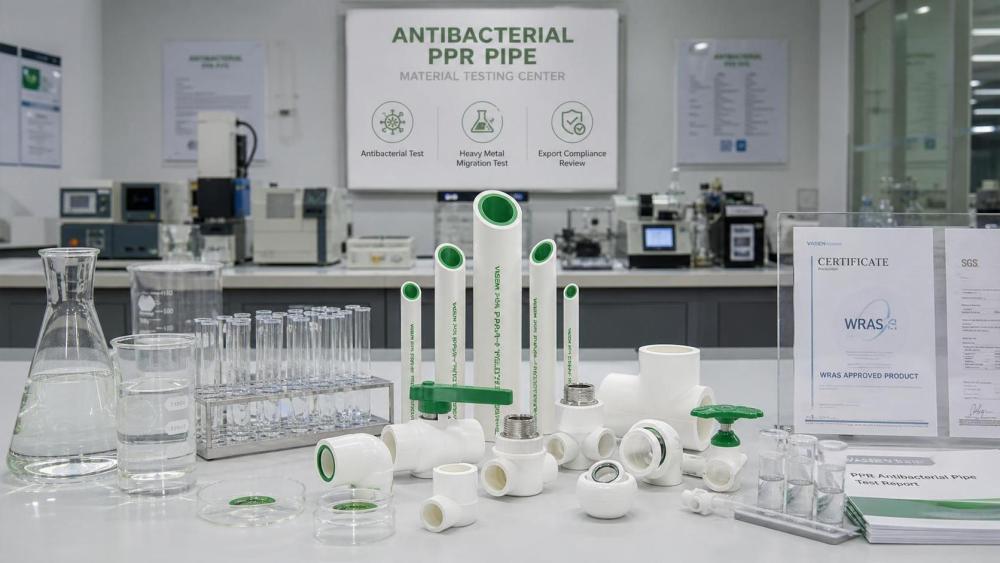
On July 2, 2026, Saudi Arabia’s Standards, Metrology and Quality Organization (SASO) issued an urgent notice that raises the import compliance threshold for antibacterial PPR pipes. From August 1, 2026, imported products will need to keep meeting the ISO 22196:2024 antibacterial rate requirement of at least 99% and also pass an additional heavy metal migration test, with lead (Pb) release capped below 0.01 mg/L. For exporters, testing institutions, supply chain coordinators, and buyers serving the Saudi market, this matters because the new rule combines a tighter technical limit with a near-term implementation date, while reported testing lead times for Chinese exporters have already stretched to 14 working days.
What the New SASO Notice Requires
According to the information provided, SASO released urgent notice Ref: SASO/SPS/2026/072 on July 2, 2026. The notice requires that, starting on August 1, 2026, all imported antibacterial PPR pipes must continue to achieve an antibacterial rate of at least 99% under ISO 22196:2024.
In addition, the same imported products must pass a heavy metal migration test under EN 14351-1 Annex A. Within that added requirement, the lead (Pb) migration limit is set at below 0.01 mg/L.
The provided information also states that this lead limit is 10 times stricter than the currently applicable international standard, and that testing lead times for Chinese exporting companies have extended to 14 working days.
Where the Immediate Pressure May Appear
Export orders facing a narrower compliance window
From an industry perspective, direct trading companies focused on Saudi shipments may be affected first because the effective date is August 1, 2026, while the reported testing cycle for Chinese exporters has already lengthened. The main pressure point is likely to be the coordination of sample preparation, testing, documents, and shipment timing for products already moving through order pipelines.
Manufacturers dealing with dual verification demands
Analysis shows that processing and manufacturing companies supplying antibacterial PPR pipes may need to pay closer attention to two parallel compliance conditions: the antibacterial performance threshold under ISO 22196:2024 and the newly added Pb migration limit. The business impact is likely to center on product release schedules, batch verification, and communication between production, quality, and export teams.
Testing and supply chain service providers under timing pressure
Observably, laboratories, inspection coordinators, and broader supply chain service providers may also feel the effect because the rule adds a new testing item while lead times are already extending. What deserves closer attention is whether service capacity, booking order, and document turnaround can support deliveries scheduled close to the August implementation date.
Buyers and import-side stakeholders needing earlier confirmation
For procurement teams and import-side business partners serving the Saudi market, the key issue may be visibility into whether shipments can meet the new condition before dispatch. The main impact is less about demand assumptions and more about delivery certainty, specification confirmation, and the risk of delays tied to compliance evidence.
What Companies Should Track Now
Watch for any further official wording or implementation detail
Analysis shows that companies should closely track whether SASO releases any further clarification around the urgent notice, especially on how the added EN 14351-1 Annex A testing requirement will be applied in practice. At this stage, the confirmed facts are the notice reference, the August 1, 2026 effective date, the continued antibacterial threshold, and the new Pb migration cap.
Review products already planned for the Saudi market
What deserves closer attention is the status of antibacterial PPR pipe models already lined up for Saudi-bound shipments. For these products, companies may need to distinguish between goods that only satisfied the previous antibacterial requirement and goods that can also support the newly added heavy metal migration test condition within the available time frame.
Reassess testing schedules and delivery commitments
Observably, the reported 14-working-day testing cycle for Chinese exporters makes scheduling a practical issue rather than a paperwork issue alone. Companies involved in procurement, manufacturing, export coordination, and customer service may need to recheck booking lead times, promised ship dates, and contract communication in light of the shorter compliance window before August 1.
Strengthen client and supplier communication around evidence readiness
From an industry perspective, a useful near-term focus is whether upstream suppliers, internal quality teams, and downstream clients are aligned on what evidence will be needed and when. The distinction between a policy requirement and actual shipment readiness is important here: a rule can be announced on one date, but its operational effect depends on testing completion, document availability, and customer acceptance of revised timelines.
Why This Looks Like More Than a Short-Term Notice
Analysis shows that this development should not be read only as a single added test item. The combination of an urgent notice, a sharply tightened Pb migration threshold, and a short lead time before enforcement suggests a stronger compliance emphasis for imported antibacterial PPR pipes entering the Saudi market.
At the same time, it is more appropriate to understand this as an active regulatory signal rather than a fully settled long-term market outcome. The confirmed facts establish the new requirement and the testing delay already being felt by Chinese exporters, but broader commercial consequences still depend on how companies adapt their verification, scheduling, and customer coordination in the coming weeks.
How the Market May Need to Read This Update
Based on the information provided, the immediate significance of this notice lies in execution risk and compliance readiness. It does not by itself confirm a lasting structural shift across all related products or markets, but it clearly raises the threshold for antibacterial PPR pipe imports into Saudi Arabia within a very short timeline.
For now, it is more appropriate to understand this as a near-term operational change with possible longer-term signaling value. The most rational reading is that companies serving the Saudi market should focus first on test readiness, shipment timing, and documentation alignment, while continuing to monitor whether further clarification changes the practical scope of enforcement.
Basis of This Article and What Still Needs Verification
This article is based on the user-provided news title, event date, and event summary concerning the SASO urgent notice on antibacterial PPR pipe imports. The specific official source link was not provided in the input, so continued verification remains necessary.
For this type of industry update, relevant source categories typically include official regulatory notices, company announcements, industry association updates, authoritative media reporting, and standard-related documents. In this case, follow-up attention should remain on any additional SASO wording, implementation clarification, and further developments affecting testing timelines and import compliance practice.
Piping Systems Expert
Related News
- 00
0000-00
PPR Pipe Joining Systems: Heat-Fusion Methods for Leak-Free Installations - 00
0000-00
How to Evaluate PPR Piping Systems in Mexico for Commercial Water Projects? - 00
0000-00
Hot Melt Piping Systems Explained: Suitable Materials, Limits, and Typical Uses - 00
0000-00
Saudi PPR Rule Tightens on Lead Migration and SABER - 00
0000-00
Saudi PPR Rule Tightens on Lead Migration
0000-00
Weekly Insights
Stay ahead with our curated technology reports delivered every Monday.