
Share
What Drives Infrastructure Recovery Materials Cost in EPC Projects?

What Drives Infrastructure Recovery Materials Cost in EPC Projects?
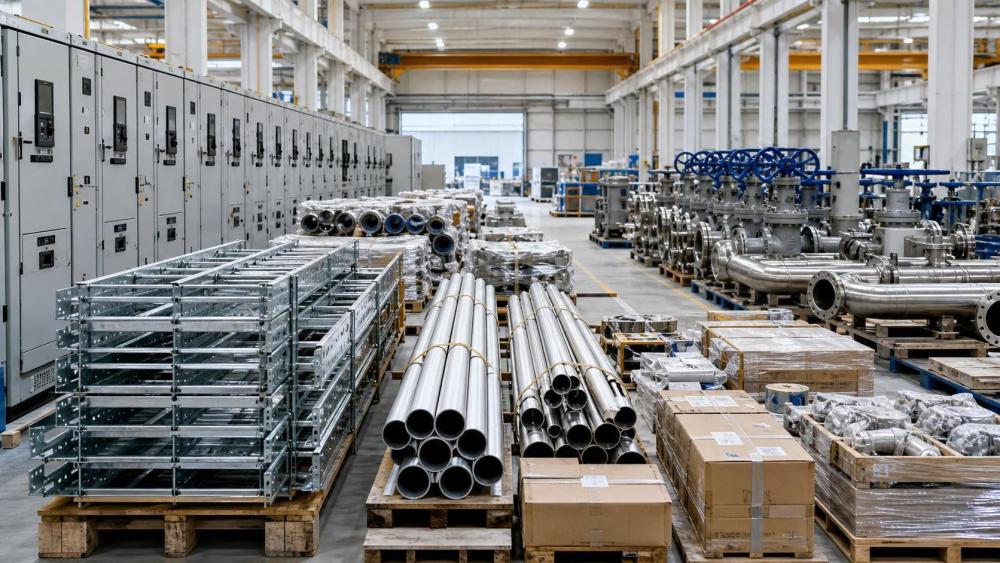
In EPC projects, infrastructure recovery materials cost rarely moves for one reason alone.
It changes when material pricing, compliance scope, schedule pressure, and supplier execution start affecting each other.
That matters because recovery work usually happens under tighter timelines than greenfield construction.
A delayed switchgear replacement, emergency piping package, or fire-rated cable order can quickly expand capital exposure.
For approvals, the useful question is not only “What is the quoted price?”
The better question is “What is driving the infrastructure recovery materials cost, and which drivers can still be controlled?”
Once that is clear, budget reviews become faster, supplier comparisons become cleaner, and risk decisions become easier to defend.
1. Raw Material Volatility Sets the Cost Floor
The first driver of infrastructure recovery materials cost is raw material exposure.
This is especially visible in copper busbars, conductors, stainless steel pipes, brass valves, aluminum components, and cable tray systems.
When commodity markets move, suppliers often revise quotations with very short validity periods.
In recovery projects, that creates a timing problem.
Approval delays can make a valid quote obsolete before purchase orders are released.
- Copper affects switchgear, busbar, cable, grounding, and many control assemblies.
- Nickel and steel movements affect piping, supports, valves, and corrosion-resistant fittings.
- Petrochemical inputs affect plastic piping, insulation, sealing products, and packaging.
From a cost review angle, this means a low quote is not always a low-risk quote.
If the supplier has weak hedging, poor inventory coverage, or unclear escalation clauses, infrastructure recovery materials cost may rise after approval.
2. Compliance Requirements Often Add Hidden Premiums
Many approval teams focus on quantity and unit price first.
Yet compliance scope often explains why infrastructure recovery materials cost exceeds early estimates.
In practice, recovery materials must fit existing site conditions and meet updated standards at the same time.
That can push buyers toward higher-spec products than the original installation used.
- Fire-rated cables with circuit integrity requirements.
- LSZH cable systems for smoke and toxicity control.
- Lead-free plumbing components for water quality compliance.
- FM or seismic-certified support systems in high-risk locations.
- Pressure-rated valves and fittings for retrofit hydraulic conditions.
The premium is not only in the product itself.
It also appears in testing records, traceability, engineering review, and documentation needed for final acceptance.
That is why infrastructure recovery materials cost should always be reviewed together with compliance evidence, not separately.
3. Recovery Scope Complexity Changes Material Consumption
A common budgeting mistake is assuming recovery work is a like-for-like replacement exercise.
It often is not.
Existing electrical and fluid systems may have undocumented changes, damaged interfaces, or outdated routing conditions.
As a result, actual material needs increase during execution.
- Cable runs become longer due to rerouting constraints.
- Pipe replacements require more fittings because old dimensions are inconsistent.
- Support systems need redesign because loads changed after previous modifications.
- Valve packages expand when balancing, isolation, and control functions are separated.
This is where infrastructure recovery materials cost starts drifting away from tender assumptions.
The more uncertain the as-built condition, the more contingency is needed inside the material budget.
4. Logistics and Urgency Can Overtake Factory Pricing
In urgent recovery work, transport and delivery timing can become a major share of infrastructure recovery materials cost.
That is especially true after outages, fire events, flood damage, or critical asset failures.
Buyers may need partial shipments, air freight, special packaging, or direct-to-site handling.
Those decisions protect schedule, but they raise landed cost quickly.
A switchboard section delayed at customs can hold back energization.
A missing pressure-reducing valve can delay water commissioning across multiple floors.
Once schedule dependency is high, the cheapest material source may become the most expensive project decision.
5. Supplier Capability Determines Cost Stability
Not every supplier can support recovery work well.
Some can offer a low headline price but struggle with matching, documentation, or fast engineering revisions.
That instability often increases infrastructure recovery materials cost later through changes, delays, and replacement orders.
A stronger supplier usually provides more than product availability.
- Technical review of compatibility with legacy systems.
- Clear material traceability and test certificates.
- Batch consistency for phased deliveries.
- Reliable lead times for critical components.
- Support for substitutions without approval risk.
This is why quote evaluation should include execution capability, not just unit rates.
For financial control, predictability matters as much as nominal savings.
6. Labor Coordination and Installation Method Influence Material Decisions
Material cost in recovery projects is closely linked to installation strategy.
A cheaper component may require more field labor, more shutdown time, or more rework.
That changes the real infrastructure recovery materials cost at project level.
Recent projects show a clearer preference for prefabricated MEP assemblies, press fittings, modular supports, and pre-engineered cable systems.
These options may cost more per unit.
However, they can reduce hot works, speed up confined-space installation, and shorten outage windows.
In actual business terms, that can improve total recovery economics.
7. How to Evaluate Infrastructure Recovery Materials Cost Before Approval
A practical review framework helps separate justified cost from avoidable inflation.
Before sign-off, focus on these checks.
- Break out raw material exposure from fabrication and distribution margins.
- Confirm whether code upgrades are included, optional, or assumed later.
- Review quote validity periods against internal approval timelines.
- Check freight assumptions, split delivery terms, and import dependencies.
- Test whether substitutions would affect approvals, warranties, or commissioning.
- Compare installation method savings against higher material unit costs.
- Require evidence of supplier stock, lead time, and document readiness.
This approach makes infrastructure recovery materials cost easier to explain internally.
It also reduces the chance of approving a quote that looks efficient but performs poorly under execution pressure.
8. The Better Decision Is Usually About Cost Confidence
In EPC recovery work, the most useful cost decision is rarely the lowest initial number.
It is the option with the strongest cost confidence.
That means the infrastructure recovery materials cost is backed by realistic scope, credible compliance, stable supply, and workable delivery timing.
For projects involving switchgear, cables, valves, piping, supports, and MEP assemblies, hidden cost drivers usually surface early for teams asking the right questions.
When approvals are tied to those questions, capital decisions become faster and stronger.
In the end, controlling infrastructure recovery materials cost is less about chasing the cheapest supplier and more about buying recoverable certainty into the project.
Mr. Julian Cross
Related News
- 00
0000-00
Pakistan's Grid Expansion Tests Cable, Switchgear and Power Equipment Supply Chains - 00
0000-00
Copper Tops $14,200 a Tonne as Tight Inventories Shape the 2026 Outlook - 00
0000-00
Anglo American Q3 Copper Output Falls 5% on Chilean Weather and Lower Ore Grades - 00
0000-00
Choosing a Water Leak Prevention Supplier: Shutoff Reliability and Support - 00
0000-00
LS Electric Wins KRW 170 Billion US Switchgear Supply Contract
0000-00
Weekly Insights
Stay ahead with our curated technology reports delivered every Monday.