
Share
Steel Wire Armoured Cable Problems: How Buyers Prevent Costly Installation Failures

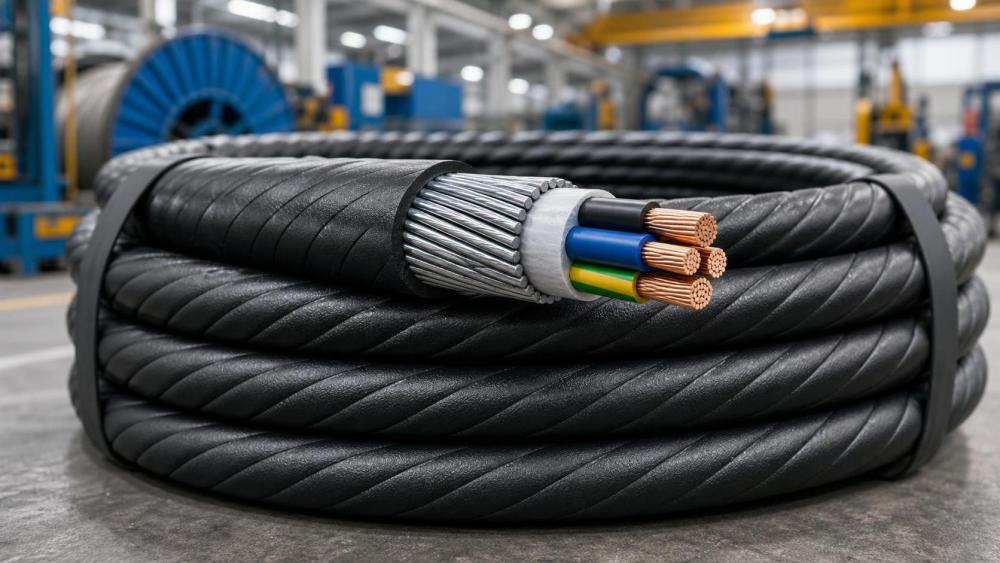
For many international buyers, Steel Wire Armoured Cable is not a casual catalogue item; it is part of a larger procurement decision that affects quality control, delivery planning, and operating risk. Cable failure is rarely caused by one headline specification; it often comes from a mismatch between installation route, armour design, drum handling, gland selection, and testing discipline. That is why the product should be evaluated through application fit, documentation clarity, supplier communication, and repeat-order stability rather than through a short quote alone.
This article is written for EPC contractors, electrical distributors, facility engineers, construction buyers, and maintenance teams who need cable systems that survive mechanical stress and site installation conditions. The goal is to make the selection discussion more practical before a buyer approves a trial order, a stock order, or a project purchase. It also keeps the core product keyword visible in the article title, TDK fields, H1, metadata, and the contextual anchor, so the article topic and landing page remain aligned during publishing.
Why the Product Category Deserves Careful Review
Steel Wire Armoured Cable is often purchased in competitive markets where several suppliers may describe similar specifications with different levels of detail. A buyer may see the same product name on multiple quotations, yet the real delivery can vary in material control, tolerance, packaging, testing, technical support, and export handling. A useful evaluation therefore begins by translating the product name into a full working specification.
The most practical question is how the product will behave in outdoor power distribution, underground routes, industrial workshops, construction projects, utility rooms, and mechanical-protection cable runs. A specification that performs well in one application may create extra cost in another. Buyers should ask what the product must resist, how it will be processed or installed, what documents will be needed at delivery, and how the next order can be repeated without starting the technical conversation again.
Another reason for careful review is that many industrial products are judged only after they enter production, installation, or daily operation. At that point, the cost of correction is higher than the cost of asking better questions early. A disciplined buyer makes the supplier explain how the proposed product, packing method, inspection routine, and service response fit the real project conditions.
Core Selection Logic for Global Buyers
The first selection step is to define the use case in plain business language. The buyer should describe the environment, expected service life, processing method, installation route, storage period, destination market, and inspection standard. This gives the supplier a more accurate basis for recommendation and reduces the risk of receiving a technically available but commercially unsuitable product.
The second step is to confirm the specification boundary. Buyers should avoid vague requests such as asking for the best model or standard size without clarifying tolerance, grade, color, finish, interface, voltage, packaging, test report, or other relevant details. In industrial procurement, the missing detail is often where later disputes begin.
The third step is supplier comparison. A useful comparison does not rank suppliers by price only. It compares response quality, document completeness, sample handling, lead time honesty, export experience, packaging control, after-sales support, and willingness to clarify risk. A supplier that explains limits clearly can be more valuable than one that agrees to every request without technical evidence.
Application Fit and Operating Conditions
Application fit is the point where the purchase becomes real. For outdoor power distribution, underground routes, industrial workshops, construction projects, utility rooms, and mechanical-protection cable runs, the product must match physical stress, environmental exposure, processing steps, regulatory expectations, and the buyer's internal acceptance process. When these factors are ignored, the buyer may receive a product that is technically named correctly but operationally weak.
Buyers should list the main application scenarios before negotiation. In this category, common use cases include industrial plants, commercial buildings, outdoor feeder lines, underground power routes, utility distribution rooms. Each use case may create different requirements for dimensions, surface condition, load behavior, resistance, compatibility, cleaning, storage, or installation. A clear use-case list helps the supplier recommend a product that fits the actual work rather than a generic item.
Operating conditions should also be written into the inquiry. Temperature, moisture, handling frequency, mechanical stress, chemical exposure, electrical load, food retail conditions, or software integration may matter depending on the product. Even when a buyer does not need a formal engineering specification, these operating details help prevent a poor match.
Practical Comparison Table
Quality Risks That Should Be Solved Before Ordering
The most common risks in this purchase category include wrong bending radius, damaged sheath during pulling, incorrect gland selection, unclear test certificates, drums stored on wet ground. These risks are not always visible in a product photo or a short quotation. They usually appear after shipment, during inspection, in processing, or in the first weeks of operation. That is why the purchase file should include more than product name, size, and price.
A buyer can reduce these risks by asking for a sample or reference specification when the order is new, confirming the exact inspection method, and requesting photos of packing before shipment. For larger orders, a pre-shipment inspection plan should include quantity, labels, surface condition, dimensions, protective materials, and document consistency. The supplier should understand the acceptance criteria before production begins.
Risk control also depends on internal communication. Sourcing, engineering, warehouse, quality, and finance teams may each care about different parts of the purchase. If only one team evaluates the quotation, important details may be missed. A shared checklist makes the decision more reliable and gives the supplier a single, clearer set of expectations.
Documentation, Packaging, and Delivery Discipline
Documentation is part of the product value. Depending on the category, buyers may need a specification sheet, material certificate, test report, safety document, user guide, packing list, warranty statement, inspection photo, or software version record. These documents help the buyer accept goods, answer customer questions, and manage future claims.
Packaging deserves equal attention because many defects happen between the factory and the buyer's warehouse. The right packing method should protect the product against impact, moisture, vibration, surface damage, bending, cable drum abuse, cabinet damage, or labeling confusion. Export buyers should ask how the supplier packs for long-distance shipping, container loading, and mixed storage conditions.
Delivery discipline includes lead time, production scheduling, inspection timing, and communication when a change occurs. Buyers should be cautious when a supplier promises a very short lead time without explaining production capacity or stock status. A credible delivery plan should make the shipment schedule, document handover, and final confirmation process clear.
How to Build a Cleaner Supplier Shortlist
A cleaner shortlist starts with comparable information. Ask each supplier for the same specification basis, same target quantity, same packing requirement, same destination, and same document request. When quotations are built on different assumptions, the lowest price is not necessarily the lowest total cost.
Buyers should also separate mandatory requirements from preferred features. Mandatory requirements are conditions without which the product cannot be used or accepted. Preferred features may improve convenience, appearance, efficiency, or service value. This separation helps the buyer negotiate without sacrificing the factors that protect the project.
For repeat orders, supplier stability matters as much as the first delivery. Ask how the supplier controls batch consistency, stores production records, handles changes, and communicates when raw material, component, or process conditions shift. A stable supplier should make the next order easier, not force the buyer to re-check every detail from the beginning.
Procurement Checklist
- Confirm the exact core product keyword: Steel Wire Armoured Cable.
- Confirm that the landing page, article title, TDK, H1, metadata, and anchor text use the same product intent.
- Choose one real portal category only: Cables & Fiber Optics | XLPE Specialty Cables.
- Request complete product specification, packing details, and delivery documents before deposit or production approval.
- Check whether the supplier understands the final application, not only the product name.
- Use one contextual external link in the article and keep the required class and target attributes in the anchor.
FAQ
Why should buyers define the application before requesting a quote?
Application details change the meaning of the specification. A buyer who explains the working environment, processing method, delivery route, and acceptance standard gives the supplier a better chance to recommend the right product and reduces the risk of rework after shipment.
Is the lowest price enough for supplier selection?
No. Price matters, but it should be compared together with specification accuracy, document support, packaging, lead time, service response, and repeat-order stability. A cheap order can become expensive if it creates scrap, installation delays, product loss, or claim handling.
Where should the anchor text appear in this publishing format?
The anchor text should appear once in a natural body sentence near the beginning of the article. The same core product keyword can appear elsewhere as plain text for readability, but only one contextual external link should be used unless the publishing plan says otherwise.
Why is a single real second-level category important?
A single real second-level category helps the editor place the article in the correct portal location. Bundled category strings separated by punctuation create uncertainty and may weaken topical fit. For this article, the selected category is Cables & Fiber Optics | XLPE Specialty Cables.
Cable & Conductor Scientist
Related News
- 00
0000-00
Steel Wire Armoured Cable Problems: How Buyers Prevent Costly Installation Failures - 00
0000-00
Sumitomo Electric Opens $468 Million HVDC Subsea Cable Factory in Scotland - 00
0000-00
How to Evaluate Thermal Resistant Electrical Insulation Systems for High-Heat Equipment - 00
0000-00
Fire Retardant Aluminum Cables: What Specs Matter for Safer Commercial Power Distribution
0000-00
Weekly Insights
Stay ahead with our curated technology reports delivered every Monday.