
Share
What Affects Electrical Protection Systems Price in Commercial Buildings?

Why does electrical protection systems price vary so much in commercial buildings?
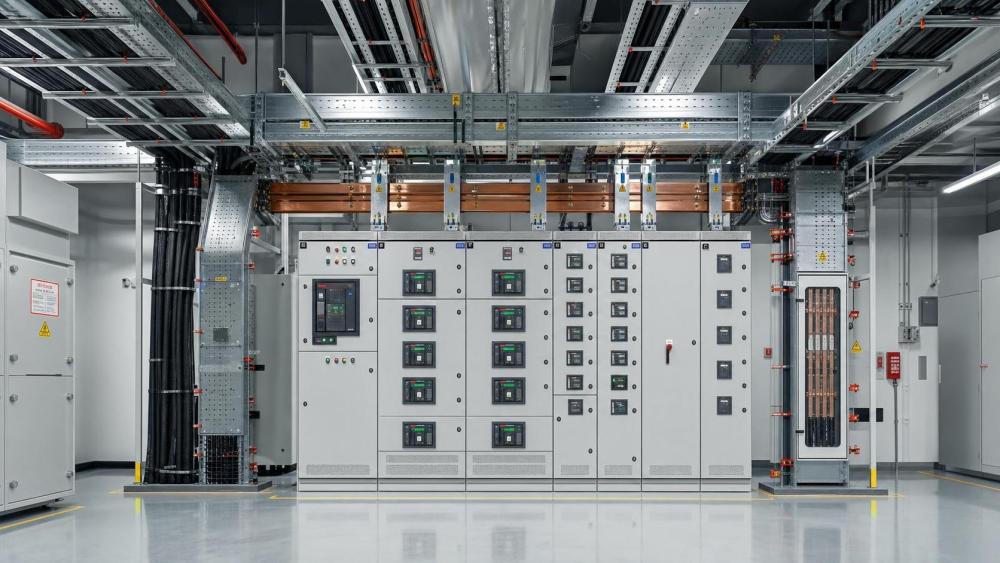
Electrical protection systems price rarely comes from one component alone. It is shaped by design scope, fault level, code compliance, material grade, and installation difficulty.
In a small office block, protection may focus on basic distribution safety. In a hospital, data center, or mixed-use tower, the same category becomes far more complex.
That is why two quotations can look similar at first glance, yet carry very different long-term risk. The cheaper number may exclude testing, selectivity studies, or certified fire performance.
A practical way to read electrical protection systems price is to ask what hazards the system must control. Overcurrent, short circuit, earth fault, arc risk, and emergency continuity all change the budget.
In commercial buildings, these systems also connect with wider MEP decisions. Switchgear layout, busbar routing, cable tray capacity, fire-rated cable selection, and maintenance access all affect cost.
Platforms such as BEFS are useful here because they frame pricing inside real building infrastructure, not as an isolated product tag. That helps compare quotes on technical substance.
Which cost drivers usually matter most before the first quote is finalized?
The biggest cost driver is often protection architecture. A simple radial distribution system costs less than a selective, zoned, and monitored protection scheme.
Fault current rating is another major factor. Higher prospective short-circuit levels require stronger breakers, better busbar design, and more robust switchgear enclosures.
Building height and occupancy also change electrical protection systems price. High-rise projects usually need longer cable routes, more risers, more coordination points, and tighter fire compartment rules.
Then there is protection continuity. If life safety loads must stay energized during fire events, fire-resistant cables, protected pathways, and tested circuit integrity add cost quickly.
Monitoring features often sit in a gray area during tender review. Basic protection can work without digital monitoring, but IoT condition alerts and metering may reduce lifecycle uncertainty.
The table below helps separate the cost signals that deserve closer review.
When these points are unclear, electrical protection systems price becomes vulnerable to variation orders later. Early technical alignment usually saves more than aggressive first-round price cutting.
Are premium components always the reason the price is higher?
Not always. Higher electrical protection systems price can come from better engineering discipline rather than luxury specification.
For example, a quote may include type-tested switchgear, documented thermal rise limits, copper busbar sizing with proper derating, and verified breaker coordination. Those items raise cost for valid reasons.
Another quote may rely on generic components that meet nominal ratings on paper, yet provide less confidence under real building duty. That difference often appears only during review.
Materials also matter, but context matters more. Copper prices affect busbars, conductors, and some termination hardware. Fire-rated cable compounds and LSZH cable formulations can shift pricing as raw material markets move.
In practice, the question is not whether a component is premium. The better question is whether the higher price buys measurable resilience, compliance, maintainability, or reduced downtime.
- Type testing can justify cost when project risk is high.
- Documented fire performance matters for emergency circuits.
- Replaceable modules can reduce future shutdown cost.
- Open communication protocols may support long-term building monitoring.
That is where BEFS-style technical content becomes useful. It helps translate product claims into comparable engineering checkpoints, especially when multiple subsystems interact in one building package.
How do codes, certification, and project location change electrical protection systems price?
Compliance is one of the least visible price drivers, yet one of the strongest. The same protection concept can cost very differently across jurisdictions.
Some projects require IEC-based documentation. Others ask for local fire authority approval, utility interface conditions, seismic certification, or project-specific witness testing.
Electrical protection systems price also rises when the installation must satisfy combined requirements. A commercial tower may need fire-rated cable supports, segregated routing, and seismic restraint for MEP infrastructure.
This is especially relevant in regions with earthquake exposure or strict evacuation rules. The protection package then extends beyond breakers into trays, supports, enclosures, and fastening systems.
More detailed compliance often means more submittals, factory records, and on-site verification. These are real costs, even when they do not appear as a single line item.
A common mistake is comparing a compliant offer with a partially compliant one. The lower figure may simply defer cost and risk into approval delays, redesign, or rejected installation work.
What hidden costs are easy to miss during tender comparison?
The first hidden cost is coordination failure. If protection settings are not aligned with actual load profiles and fault studies, commissioning can take longer and rework becomes expensive.
The second is installation interface risk. Cable trays, risers, busbar trunking, fire stopping, and access clearances are often priced by different parties, yet function as one system.
A third issue is maintenance downtime. Some lower-cost assemblies are harder to inspect, isolate, or expand. That affects future tenant fit-outs and operating continuity.
It helps to review hidden costs through a short checklist.
- Are protection studies included, or assumed to be separate?
- Does the offer include fire stopping around cable penetrations?
- Are support systems rated for fire and seismic conditions where required?
- Is testing and commissioning fully itemized?
- Can replacement parts be sourced locally within a realistic lead time?
These questions often explain why electrical protection systems price moves after contract award. They also show why a clean bill of quantities is not enough by itself.
So how should a buyer judge value instead of just chasing the lowest number?
Start by separating price from value. Electrical protection systems price is an entry point, not the final decision metric.
A stronger comparison usually combines capital cost, compliance confidence, installation simplicity, operating continuity, and expected maintenance burden. When those are scored together, rankings often change.
It is also worth checking whether the proposed system fits the building’s real operating profile. A retail complex, hotel, office tower, and medical facility do not carry the same protection priorities.
More mature reviews look at adjacent infrastructure too. Busbar systems, switchgear ventilation, cable fire behavior, tray loading, and IoT monitoring can influence protection performance over time.
That broader view is where BEFS-related intelligence is useful. Electrical safety does not stand alone inside commercial buildings; it sits inside a network of power, fire, mechanical, and structural decisions.
The most reliable next step is simple. Define the protection objective, confirm compliance obligations, compare inclusions line by line, and test each quote against lifecycle risk.
When electrical protection systems price is reviewed this way, the decision becomes less about headline cost and more about avoiding under-specification, delays, and expensive operational surprises.
Dr. Silas Vance
Related News
- 00
0000-00
Hospital MEP Fire Safety: Coordinating Smoke Control and Emergency Power - 00
0000-00
Sungrow PowerTitan 3.0 Passes Large-Scale UL 9540A Fire Test - 00
0000-00
Building Fire Safety Systems: How Alarms, Sprinklers, and Smoke Control Work Together - 00
0000-00
How to Size Brass Pressure Reducing Valves for Potable Water Plumbing - 00
0000-00
Residential Plumbing Pipe Systems: Water Supply, Drainage, and Venting Explained
0000-00
Weekly Insights
Stay ahead with our curated technology reports delivered every Monday.