Share
Building Fire Safety Systems for Data Centers: Key Design Risks and Solutions

Why building fire safety systems data centers need a different design lens
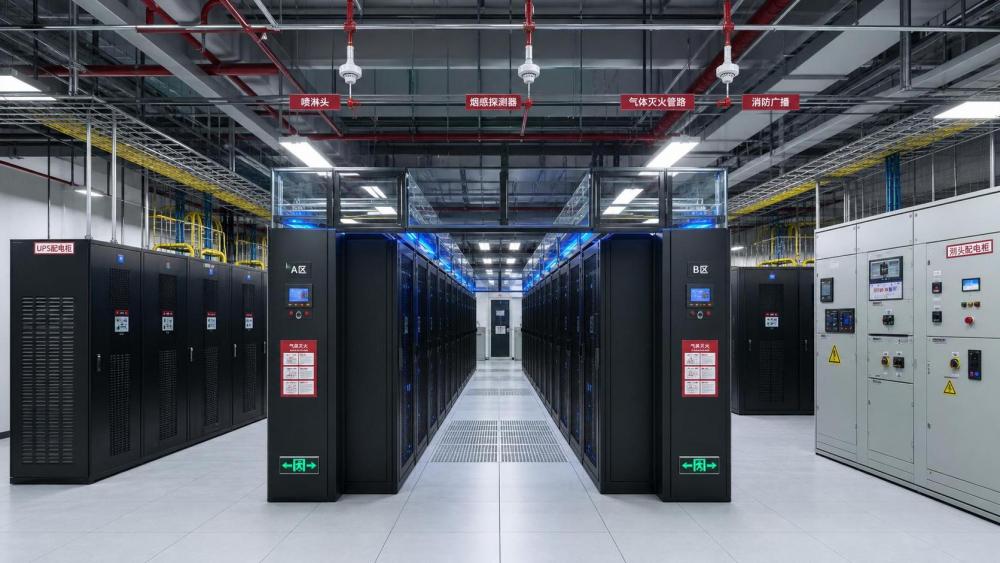
Building fire safety systems data centers sit at the intersection of life safety, uptime, and asset protection.
That combination changes the design logic.
In a standard commercial building, evacuation and structural protection often dominate the fire strategy.
In a data center, even a small incident can also damage servers, switchgear, busbar routes, fiber links, and cooling continuity.
The practical issue is not choosing one fire product.
It is coordinating suppression, detection, electrical distribution, airflow, and maintenance access without creating a new failure point.
This is why building fire safety systems data centers are often reviewed together with MEP infrastructure.
The same project may involve fire-rated cables, LSZH cable paths, containment, pipe routing, valves, monitoring points, and seismic support details.
A portal like BEFS is useful in this context because the real risks are usually hidden inside those connected systems.
The main lesson from actual projects is simple.
Two facilities may look similar on paper, yet their fire design priorities can differ sharply because load density, redundancy tier, airflow pattern, and local compliance pressure are not the same.
Actual layouts change the risk profile before suppression even starts
One common scenario is a high-density white space with hot aisle containment.
Here, smoke movement is not always predictable in the same way as an open room.
Detection must consider air velocity, return paths, and possible stratification around racks and cable trays.
If the design only follows nominal room volume, early warning may arrive too late.
Another frequent condition is the electrical room serving UPS, switchgear, batteries, and distribution boards.
This area may need different zoning from the server hall.
Arc flash risk, cable insulation performance, and ventilation behavior can alter both fire growth and system response.
Where battery energy storage is involved, the approach becomes even more selective.
Thermal runaway detection, gas release concerns, and isolation planning matter as much as extinguishing media.
A third case appears in edge or retrofit data centers inside mixed-use buildings.
These projects usually inherit older pipe routes, tighter ceilings, and less forgiving service clearances.
In that setting, building fire safety systems data centers must fit around existing busbar systems, piping networks, and structural supports.
The best technical option on paper may fail because installation tolerance is too limited.
Different conditions lead to different design questions
A useful way to compare building fire safety systems data centers is to look at the decision points rather than the brand names.
This kind of comparison prevents a common mistake.
Teams often assume similar IT capacity means similar protection logic.
In practice, layout physics and service integration often drive the real difference.
Where building fire safety systems data centers usually fail in design review
The first weak point is overreliance on suppression type alone.
Clean agent selection matters, but it does not solve poor detection coverage or weak room integrity.
If leakage rates are not controlled, discharge concentration may not hold long enough to work.
The second weak point is incomplete coordination with electrical infrastructure.
Fire events often affect switchgear operation, protection relay logic, busbar isolation, and emergency power transfer.
Where fire-rated cables are specified, the review should confirm actual routing conditions.
Ninety-minute circuit integrity on paper means little if supports, penetrations, or adjacent materials fail earlier.
The third weak point appears around piping and valve coordination.
Water-based backup systems, pre-action lines, and cooling pipes can introduce leakage concerns near sensitive equipment.
That does not mean water is always unsuitable.
It means valve reliability, pressure control, drainage planning, and test procedures need closer attention.
Another overlooked issue is smoke toxicity and evacuation impact in cable-rich spaces.
LSZH cable choices can improve visibility and reduce corrosive byproducts, especially where personnel response and asset recovery matter.
In actual use, that choice becomes part of the fire strategy, not just a cable specification line.
Misjudgments that create avoidable risk
- Treating the server room and electrical room as one fire zone without checking event propagation paths.
- Choosing products by datasheet value while ignoring airflow, maintenance access, and cable congestion.
- Focusing on capital cost while overlooking discharge testing, refilling, downtime, and replacement constraints.
- Assuming code compliance automatically means operational resilience.
- Ignoring seismic bracing and support behavior in regions where MEP movement can damage fire protection lines.
What practical adaptation looks like across common data center conditions
In greenfield hyperscale projects, the strongest approach is integrated design from the start.
Detection, suppression, switchgear segregation, cable tray routing, and pipe supports should be modeled together early.
This reduces late clashes and improves testability.
In colocation facilities, the adaptation challenge is usually tenant variability.
Rack density, cable additions, and airflow changes can alter the original fire assumptions over time.
Here, building fire safety systems data centers benefit from modular zoning and IoT monitoring that can reveal drift from original design conditions.
In edge facilities, maintenance simplicity becomes more important.
A technically advanced system may still be the wrong fit if local testing support, refill logistics, or spare parts access are weak.
The more realistic choice is often the solution with clearer serviceability and fewer hidden dependencies.
Useful checks before locking the scheme
- Map fire zones against real electrical single-line and cooling distribution paths.
- Confirm room integrity, cable penetration sealing, and support performance under fire conditions.
- Review whether fire-rated cables and LSZH materials match the actual emergency functions required.
- Check whether valve access, drainage points, and inspection routes stay usable after full equipment installation.
- Test alarm logic against shutdown sequence, not as a standalone fire event.
These checks reflect the broader BEFS view of building systems.
Electrical safety, fluid control, material compliance, and lifecycle maintenance should be reviewed as one connected framework.
The most reliable next step is a condition-based review, not a generic upgrade
Building fire safety systems data centers perform best when design decisions follow actual operating conditions.
That means looking beyond suppression media and checking how electrical continuity, cable behavior, pipe risk, access limits, and compliance obligations interact.
A useful next move is to document each protected area by load density, airflow pattern, power topology, cable type, and maintenance constraints.
Then compare those conditions against detection speed, discharge effectiveness, circuit integrity, leakage tolerance, and recovery time expectations.
That process usually reveals where generic assumptions no longer fit.
It also helps define whether the priority is resilience improvement, compliance closure, retrofit coordination, or lifecycle risk reduction.
For building fire safety systems data centers, the strongest designs are rarely the most complicated.
They are the ones aligned with the real scene, the real infrastructure, and the real failure modes likely to appear over time.
Dr. Silas Vance
Related News
- 00
0000-00
How Building Maintenance Technology Helps Reduce Downtime in Commercial Facilities - 00
0000-00
Building Condition Monitoring for Commercial Facilities: Sensors, Alerts, and Use Cases - 00
0000-00
Building Fire Safety Systems for Data Centers: Key Design Risks and Solutions - 00
0000-00
Fire Resistance Standards Testing: What Buyers Should Check Before Product Approval - 00
0000-00
Fire Resistance Standards Explained: Key Ratings, Test Methods, and Compliance Checks
Weekly Insights
Stay ahead with our curated technology reports delivered every Monday.